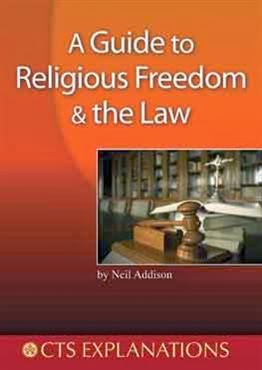
The Christian Institute has issued an excellent guide to the rules and exemptions covering Churches and Marriage now that the Marriage (Same Sex Couples) Act 2013 is in force.
Details are HERE and you can download the Guide itself.
Friday, 16 May 2014


Thursday, 8 May 2014
Greece v Galloway - Town Council Prayers in the US
In the case of Town of Greece v Galloway 572 U.S. ____ (2014) the United States Supreme Court has decided that that prayers before the opening of meetings of a Town Council does not violate the Ist Amendment to the U.S. Constitution which prohibits
"an establishment of religion".
The case has echoes of the English case of Bone v Bideford Town Council [2012] EWHC 175 (Admin) (discussed in my 10 February Blog)
The case emerged after two women filed suit against the town of Greece in New York, claiming that the town’s practice of opening town council meetings with prayer violated the 1st Amendment. The facts presented in the case indicated that the vast majority of citizens who prayed were Christians, and that their prayers were Christian in content. The women charged that this practice violated the Establishment Clause of the Constitution. They did not demand that the practice of prayers before council meetings cease, but demanded that the prayers offered should be “inclusive and ecumenical prayers” and that all references would be to a “generic God.”
The Court ruled that the practice of the Town Council did not, in fact, violate the 1st Amendment and more interestingly rejected the entire concept of requiring prayer to be “nonsectarian prayer” to a “generic God.” As the Court stated:
"To hold that invocations must be nonsectarian would force the legislatures sponsoring prayers and the courts deciding these cases to act as supervisors and censors of religious speech, thus involving government in religious matters to a far greater degree than is the case under the town’s current practice of neither editing nor approving prayers in advance nor criticizing their content after the fact. Respondents’ contrary arguments are unpersuasive. It is doubtful that consensus could be reached as to what qualifies as a generic or nonsectarian prayer. It would also be unwise to conclude that only those religious words acceptable to the majority are permissible, for the First Amendment is not a majority rule and government may not seek to define permissible categories of religious speech."
In looking at the background to the case the Supreme Court noted that the town Council followed an informal method for selecting prayer givers, a town employee would call the congregations listed in a local directory until she found a minister available for that month’s meeting. The town at no point excluded or denied an opportunity to a would-be prayer giver. A minister or layperson of any persuasion, could give the invocation. But nearly all of the congregations in town were Christian; and the participating ministers were too. The Town Council neither reviewed the prayers in advance of the meetings nor provided guidance as to their tone or content. On one occasion a Wiccan Priestess applied to give the prayers and was allowed to do so.
Justice Kennedy, giving the majority ruling in the case noted that that today’s interpretation of the Constitution must be guided by the actual practices of the framers. In other words, the Constitution must not be read to forbid what the framers of the document unquestionably allowed. He also quoted with approval the memorable words of Goldburg J in Abington School District v. Schempp
“untutored devotion to the concept of neutrality” must not lead to “a brooding and pervasive devotion to the secular”
Justice Kennedy also added
Our tradition assumes that adult citizens, firm in their own beliefs, can tolerate and perhaps appreciate a ceremonial prayer delivered by a person of a different faith.
A point regarding tolerance that our National Secular Society should perhaps think about
"an establishment of religion".
The case has echoes of the English case of Bone v Bideford Town Council [2012] EWHC 175 (Admin) (discussed in my 10 February Blog)
The case emerged after two women filed suit against the town of Greece in New York, claiming that the town’s practice of opening town council meetings with prayer violated the 1st Amendment. The facts presented in the case indicated that the vast majority of citizens who prayed were Christians, and that their prayers were Christian in content. The women charged that this practice violated the Establishment Clause of the Constitution. They did not demand that the practice of prayers before council meetings cease, but demanded that the prayers offered should be “inclusive and ecumenical prayers” and that all references would be to a “generic God.”
The Court ruled that the practice of the Town Council did not, in fact, violate the 1st Amendment and more interestingly rejected the entire concept of requiring prayer to be “nonsectarian prayer” to a “generic God.” As the Court stated:
"To hold that invocations must be nonsectarian would force the legislatures sponsoring prayers and the courts deciding these cases to act as supervisors and censors of religious speech, thus involving government in religious matters to a far greater degree than is the case under the town’s current practice of neither editing nor approving prayers in advance nor criticizing their content after the fact. Respondents’ contrary arguments are unpersuasive. It is doubtful that consensus could be reached as to what qualifies as a generic or nonsectarian prayer. It would also be unwise to conclude that only those religious words acceptable to the majority are permissible, for the First Amendment is not a majority rule and government may not seek to define permissible categories of religious speech."
In looking at the background to the case the Supreme Court noted that the town Council followed an informal method for selecting prayer givers, a town employee would call the congregations listed in a local directory until she found a minister available for that month’s meeting. The town at no point excluded or denied an opportunity to a would-be prayer giver. A minister or layperson of any persuasion, could give the invocation. But nearly all of the congregations in town were Christian; and the participating ministers were too. The Town Council neither reviewed the prayers in advance of the meetings nor provided guidance as to their tone or content. On one occasion a Wiccan Priestess applied to give the prayers and was allowed to do so.
Justice Kennedy, giving the majority ruling in the case noted that that today’s interpretation of the Constitution must be guided by the actual practices of the framers. In other words, the Constitution must not be read to forbid what the framers of the document unquestionably allowed. He also quoted with approval the memorable words of Goldburg J in Abington School District v. Schempp
“untutored devotion to the concept of neutrality” must not lead to “a brooding and pervasive devotion to the secular”
Justice Kennedy also added
Our tradition assumes that adult citizens, firm in their own beliefs, can tolerate and perhaps appreciate a ceremonial prayer delivered by a person of a different faith.
A point regarding tolerance that our National Secular Society should perhaps think about
Friday, 25 April 2014
Christian Youth Camps - Victoria Supreme Court
The Supreme Court of Victoria (Australia) has issued a worrying and questionable decision regarding a refusal by a Christian Youth Camp to refuse a booking by a Gay Rights Organisation. The Judgment Christian Youth Camps v Cobaw Community Health Service [2014] VSCA 75 is carefully analysed and dissected by Professor Neil Foster of Newcastle Law School in New South Wales.
He has kindly put his analysis on the Internet and since I cannot possibly improve on what he has said I simply provide the link to Download his article
He has kindly put his analysis on the Internet and since I cannot possibly improve on what he has said I simply provide the link to Download his article
Tuesday, 4 March 2014
Church of Jesus Christ of Latter-Day Saints v. the United Kingdom
The European Court of Human Rights in Church of Jesus Christ of Latter-daySaints v. the United Kingdom (also in PDF) has unanimously dismissed a case brought by the Church of Jesus Christ of Latter-day Saints (often called the Mormon Church) claiming a breach of Article 9 of the European Convention on Human Rights
The case related to the issue of Rate Relief for one of the two LDS Temples in Britain, namely the one in Preston, Lancashire. A Temple is considered, by the LDS Church to be the house of the Lord and one of the holiest places on earth. Ceremonies or “ordinances” held at the temple carry profound theological significance to Mormons, who believe as a tenet of their faith that only the worthy may be admitted. Only the most devout members of the applicant Church, who hold a current “recommend”, are entitled to enter the temples. According to para 7 of the Judgment the right to enter a Temple is explained by the Church as follows:
“WORTHY TO ENTER
You must possess a current recommend to be admitted to the temple ... Only those who are worthy should go to the temple ...
The interview for a temple recommend is conducted privately between the bishop and the Church member concerned. Here the member is asked searching questions about his or her personal conduct, worthiness and loyalty to the Church and its officers. The person must certify that he is morally clean and keeping the Word of Wisdom, paying a full tithing [approximately 10% of income to be paid to the Church], living in harmony with the teachings of the Church and not maintaining any affiliation or sympathy with apostate groups ...
THE PROCESS OF OBTAINING A TEMPLE RECOMMEND IS A BLESSING”
The standards required in order to be granted a recommend include honesty, eschewing abusive conduct, attention to family duties, marital fidelity, the adoption of healthy lifestyle practices and, for divorcees, full compliance with support orders and other legal obligations.
The specific case concerned the temple at Preston, where congregational services are attended by on average 950 people a week. Under the Local Government Finance Act 1988, a valuation officer must compile and maintain a local rating list for his or her area. Premises included on the list are liable for the payment of business rates. Premises used for charitable purposes are entitled to charity business rates relief, which cuts the amount of rates payable by 80%. Places of “public religious worship” are wholly exempt from the tax. In 1998 the Preston temple was listed as a building used for charitable purpose and therefore retained a liability to pay only 20% rates, but it was refused the statutory tax exemption reserved for places of “public religious worship”. Other buildings of the Church such as its various Chapels are open to the public and attract the normal 100% rates relief.
On 5 March 2001 the Church applied to have the temple removed from the rating list, claiming the benefit of the exemption for places of “public religious worship”. On 21 October 2004 the Lancashire Valuation Tribunal granted the application for appeal and determined the temple to be exempt under the statutory provision. On 14 December 2005 the Lands Tribunal overturned that decision. The Church appealed unsuccessfully to the Court of Appeal and then appealed to the House of Lords.
In that hearing Gallagher (Valuation Officer) v. Church of Jesus Christ of Latter-day Saints [2008] UKHL 56 the Church argued for the first time that refusal of Rates Relief amounted to a breach of Article 9 but the House of Lords unanimously dismissed the appeal holding, on the basis of an earlier judgment (Church of Jesus Christ of Latter-day Saints v. Henning [1964] AC 420), that as a matter of domestic law a place of “public religious worship” must be one that was open to the general public. (NB: The Henning case had concerned the other LDS Temple in Surrey)
The Government in its arguments to the ECHR did not accept that the LDS Church was in any different position in relation to the 1988 Act than any other religious organisation. The rule was of general application and concerned only the use made of the building; it did not discriminate on the basis of religious belief. Any of the Mormon places of worship, such as chapels and stake centres, that were open to the public, had the benefit of rates the exemption. The Government pointed out as an example that where Church of England churches were run by closed orders or as college chapels which were not open to the public they too did not get rates relief,
The LDS Church put in a very interesting argument summarised in para 21 of the judgment
Temple worship, by its very nature as understood by its believers, required that only those who voluntarily lived by the kinds of commitments made in the temple should be allowed to participate. This was not a case of worship being made private for the purposes of being exclusive or to provide private benefit; it was because the very nature of the worship as understood by its believers required privacy to promote the sacred character of the worship. The relevant analogy would be to insist that the tax exemption be denied to space devoted to confessionals or to the area behind the iconostasis in Orthodox churches. Just as an invitation to the general public to enter these spaces would disrupt sacred practices, so the nature of temple worship would be destroyed if there were a general requirement that the public be able to sit in.
However the argument was unsuccessful the Court fully accepting the reasoning of the House of Lords. The case fell within the margin of appreciation given to individual states and the UK was entitled to decide that tax reliefs should only be given to places of religious worship which were open to the public and so provided "public benefit"
The case related to the issue of Rate Relief for one of the two LDS Temples in Britain, namely the one in Preston, Lancashire. A Temple is considered, by the LDS Church to be the house of the Lord and one of the holiest places on earth. Ceremonies or “ordinances” held at the temple carry profound theological significance to Mormons, who believe as a tenet of their faith that only the worthy may be admitted. Only the most devout members of the applicant Church, who hold a current “recommend”, are entitled to enter the temples. According to para 7 of the Judgment the right to enter a Temple is explained by the Church as follows:
“WORTHY TO ENTER
You must possess a current recommend to be admitted to the temple ... Only those who are worthy should go to the temple ...
The interview for a temple recommend is conducted privately between the bishop and the Church member concerned. Here the member is asked searching questions about his or her personal conduct, worthiness and loyalty to the Church and its officers. The person must certify that he is morally clean and keeping the Word of Wisdom, paying a full tithing [approximately 10% of income to be paid to the Church], living in harmony with the teachings of the Church and not maintaining any affiliation or sympathy with apostate groups ...
THE PROCESS OF OBTAINING A TEMPLE RECOMMEND IS A BLESSING”
The standards required in order to be granted a recommend include honesty, eschewing abusive conduct, attention to family duties, marital fidelity, the adoption of healthy lifestyle practices and, for divorcees, full compliance with support orders and other legal obligations.
The specific case concerned the temple at Preston, where congregational services are attended by on average 950 people a week. Under the Local Government Finance Act 1988, a valuation officer must compile and maintain a local rating list for his or her area. Premises included on the list are liable for the payment of business rates. Premises used for charitable purposes are entitled to charity business rates relief, which cuts the amount of rates payable by 80%. Places of “public religious worship” are wholly exempt from the tax. In 1998 the Preston temple was listed as a building used for charitable purpose and therefore retained a liability to pay only 20% rates, but it was refused the statutory tax exemption reserved for places of “public religious worship”. Other buildings of the Church such as its various Chapels are open to the public and attract the normal 100% rates relief.
On 5 March 2001 the Church applied to have the temple removed from the rating list, claiming the benefit of the exemption for places of “public religious worship”. On 21 October 2004 the Lancashire Valuation Tribunal granted the application for appeal and determined the temple to be exempt under the statutory provision. On 14 December 2005 the Lands Tribunal overturned that decision. The Church appealed unsuccessfully to the Court of Appeal and then appealed to the House of Lords.
In that hearing Gallagher (Valuation Officer) v. Church of Jesus Christ of Latter-day Saints [2008] UKHL 56 the Church argued for the first time that refusal of Rates Relief amounted to a breach of Article 9 but the House of Lords unanimously dismissed the appeal holding, on the basis of an earlier judgment (Church of Jesus Christ of Latter-day Saints v. Henning [1964] AC 420), that as a matter of domestic law a place of “public religious worship” must be one that was open to the general public. (NB: The Henning case had concerned the other LDS Temple in Surrey)
The Government in its arguments to the ECHR did not accept that the LDS Church was in any different position in relation to the 1988 Act than any other religious organisation. The rule was of general application and concerned only the use made of the building; it did not discriminate on the basis of religious belief. Any of the Mormon places of worship, such as chapels and stake centres, that were open to the public, had the benefit of rates the exemption. The Government pointed out as an example that where Church of England churches were run by closed orders or as college chapels which were not open to the public they too did not get rates relief,
The LDS Church put in a very interesting argument summarised in para 21 of the judgment
Temple worship, by its very nature as understood by its believers, required that only those who voluntarily lived by the kinds of commitments made in the temple should be allowed to participate. This was not a case of worship being made private for the purposes of being exclusive or to provide private benefit; it was because the very nature of the worship as understood by its believers required privacy to promote the sacred character of the worship. The relevant analogy would be to insist that the tax exemption be denied to space devoted to confessionals or to the area behind the iconostasis in Orthodox churches. Just as an invitation to the general public to enter these spaces would disrupt sacred practices, so the nature of temple worship would be destroyed if there were a general requirement that the public be able to sit in.
However the argument was unsuccessful the Court fully accepting the reasoning of the House of Lords. The case fell within the margin of appreciation given to individual states and the UK was entitled to decide that tax reliefs should only be given to places of religious worship which were open to the public and so provided "public benefit"
Friday, 28 February 2014
Prosecution in Australia of Unregistered Muslim Marriage
The issue of unregistered Muslim Marriages is something I have Blogged on in the past see http://religionlaw.blogspot.co.uk/2010/02/muslim-marriages-4.html where I give links to my other Blogs on this subject.
I have consistently said that in my view those who perform unregistered Muslim Marriages should be prosecuted under s75 of the Marriage Act 1949 which makes it a criminal offence to solemnise a Marriage in England and Wales otherwise than in accordance with the Act.
There is a similar, though rather more straightforwardly worded provision in s101 of the Australian Marriage Act 1961.
In Australia it has been reported that an Imam is to face trial for conducting an unregistered Marriage though in that case the alleged criminality is aggravated by the fact that the "Bride" is reported to have been 12 at the time.
It will be interesting to watch this case and see if it might inspire the English Police to start to enforce our Marriage Act in the same way as the Australian Police are enforcing theirs
I have consistently said that in my view those who perform unregistered Muslim Marriages should be prosecuted under s75 of the Marriage Act 1949 which makes it a criminal offence to solemnise a Marriage in England and Wales otherwise than in accordance with the Act.
There is a similar, though rather more straightforwardly worded provision in s101 of the Australian Marriage Act 1961.
In Australia it has been reported that an Imam is to face trial for conducting an unregistered Marriage though in that case the alleged criminality is aggravated by the fact that the "Bride" is reported to have been 12 at the time.
It will be interesting to watch this case and see if it might inspire the English Police to start to enforce our Marriage Act in the same way as the Australian Police are enforcing theirs
Wednesday, 5 February 2014
St Margaret’s Children and Family Care Society (3) SCAP Judgment
The decision in the case of St Margaret's Children and Family Care Society v Office of the Scottish Charity Regulator has been published on the website of the Scottish Charity Appeal Panel and it makes interesting and at times confusing reading. For the past history of this case and the English Adoption Agencies see HERE and HERE
It is of course a decision at first instance so it is not binding on any other Court or Tribunal however it is a decision which is likely to be highly persuasive in any other Case involving a Religious Charity so it is worth the trouble of reading in detail.
The Judgment emphasises that the case is largely based on the specific facts of the operations of St Margarets and indeed the main criticism it makes of OSCR is that it was applying a blanket approach that assumed St Margarets was breaking the Equality Act and therefore it should be removed from the Charity Register. One point that is made in the judgment more than once is that there was no complaint made about St Margarets by any prospective adoptive couple either same sex or heterosexual and the investigation by OSCR was based on a purely theoretical complaint from the National Secular Society. In this respect paras 740 - 810 are interesting because they looks at the reason why OSCR was threatening to remove St Margarets from the Register namely because, in the opinion of OSCR, St Margarets was breaching the Equality Act and therefore did not offer "public benefit" which is a requirement of Charity Registration in Scotland (and also in England)
"It appears to The Panel, ......, that [OSCR] simply took the view at an early stage that any type of discrimination which breached The Equality Act amounted to a disbenefit sufficient to fail The Public Benefit Test.
This approach was in The Panel's view erroneous and the Public Benefit Test was incorrectly applied .........
The Panel is of the view that it is not as simple to say that if The Equality Act is breached then the Public Benefit Test is not met and any guidelines contrary to that view should be revised by [OSCR]...... The contribution to society of an adoption service is part of the activities of The Appellant which does provide a Public Benefit in the charity law sense of that phrase and had the test been properly applied The Respondent would have quite correctly considered there to have been Public Benefit in those activities."
This may be of help to any Charity which is accused in the future of breaching the Equality Act. Any such breach does not mean that the Charity should automatically cease to be a Charity. If there are breaches of the Equality Act then such breaches should be dealt with in accordance with the regulatory provisions of the Equality Act and not by refusing or removing Charitable status.
Of a more general application is the fact that SCAP found that St Margarets was a "Religious Organisation" for the purpose of Schedule 23 of the Equality Act (which provides exemptions for Religious Organisations) and was also a "manifestation" of Religion for the purposes of Article 9 of the European Convention of Human Rights. It was argued by OSCR that St Margarets was simply an Adoption Agency and therefore was not "religious" Paras 470 - 490 are fascinating in this respect
"The Catholic Church understands charity as a fundamental aspect of the life of the Church. It is not something that the Church does, but something that the Church is, and which defines the Church's nature. Charitable activity within and for the wider community is seen to be an essential part of the religious mission, witness and outreach of the Catholic Church (Benedict XVI Encyclical Deus Caritas Est (2005))."
"Catholic laity have the right under Canon Law (Canon 1030 of the Code of Canon Law) to form charitable agencies under the auspice of the Catholic church. Such Catholic charities are required as a matter of Catholic Canon Law to follow Catholic principles in their activity and they may not accept commitments which could in any way affect the observance of those principles. (Benedict XVI " Apostolic Letter "On the Service of Charity"
Whilst in Para 1000 referring to the evidence given by a Director of St Margarets
"the Catholic Faith was a lifestyle more than the mechanics of attending a church and part of that lifestyle was the importance of stable family relationships found within married couples. He [the witness] referred to Matthew 25 from the New Testament as his pointer and what he considered The Appellant's organisation was all about. ('Lord, when did we see you hungry and feed you, or thirsty and give you a drink? When did we see you as a stranger and welcome you, or naked and give you clothes to wear? When did we see you sick or in prison and visit you?' "Then the king will reply to them, 'I assure you that when you have done it for one of the least of these brothers and sisters of mine, you have done it for me.)
and Para 1090
"The Panel does not agree with The Respondent that The Appellant is
merely an Adoption Agency or a non-religious charity simply because its main purpose appears not to be to conduct worship services. There are other religious charities for example who do not worship a deity but are
entitled to be charities and The Act does not define religion and belief as exclusively for worship, hymn singing, services and sacraments. Differing religions and differing charities whose principal purpose is the advancement of religion carry out these activities to a greater or lesser extent.
The Panel is of the view that The Appellant is a Religious Charity and there are the essential characteristics to make it so. As a Religious Charity it is able to rely on Article 9 on its own behalf and on behalf of its members."
How the future will lie for St Margarets is difficult to say. it is likely that OSCR will decide not to Appeal because the Panels decision on the very narrow point of "public Interest" was, legally speaking, the crucial point in relation to the powers and the actions of OSCR and the Panels decision on that point seems unassailable. St Margarets may however be faced with further legal action from the Equality and Human Rights Commission and no doubt from the troublemakers of the National Secular Society. What really gets to me is that the NSS don't do anything themselves to help Children or indeed to help anyone they simply criticise and try to change the good works done by others.
It is of course a decision at first instance so it is not binding on any other Court or Tribunal however it is a decision which is likely to be highly persuasive in any other Case involving a Religious Charity so it is worth the trouble of reading in detail.
The Judgment emphasises that the case is largely based on the specific facts of the operations of St Margarets and indeed the main criticism it makes of OSCR is that it was applying a blanket approach that assumed St Margarets was breaking the Equality Act and therefore it should be removed from the Charity Register. One point that is made in the judgment more than once is that there was no complaint made about St Margarets by any prospective adoptive couple either same sex or heterosexual and the investigation by OSCR was based on a purely theoretical complaint from the National Secular Society. In this respect paras 740 - 810 are interesting because they looks at the reason why OSCR was threatening to remove St Margarets from the Register namely because, in the opinion of OSCR, St Margarets was breaching the Equality Act and therefore did not offer "public benefit" which is a requirement of Charity Registration in Scotland (and also in England)
"It appears to The Panel, ......, that [OSCR] simply took the view at an early stage that any type of discrimination which breached The Equality Act amounted to a disbenefit sufficient to fail The Public Benefit Test.
This approach was in The Panel's view erroneous and the Public Benefit Test was incorrectly applied .........
The Panel is of the view that it is not as simple to say that if The Equality Act is breached then the Public Benefit Test is not met and any guidelines contrary to that view should be revised by [OSCR]...... The contribution to society of an adoption service is part of the activities of The Appellant which does provide a Public Benefit in the charity law sense of that phrase and had the test been properly applied The Respondent would have quite correctly considered there to have been Public Benefit in those activities."
This may be of help to any Charity which is accused in the future of breaching the Equality Act. Any such breach does not mean that the Charity should automatically cease to be a Charity. If there are breaches of the Equality Act then such breaches should be dealt with in accordance with the regulatory provisions of the Equality Act and not by refusing or removing Charitable status.
Of a more general application is the fact that SCAP found that St Margarets was a "Religious Organisation" for the purpose of Schedule 23 of the Equality Act (which provides exemptions for Religious Organisations) and was also a "manifestation" of Religion for the purposes of Article 9 of the European Convention of Human Rights. It was argued by OSCR that St Margarets was simply an Adoption Agency and therefore was not "religious" Paras 470 - 490 are fascinating in this respect
"The Catholic Church understands charity as a fundamental aspect of the life of the Church. It is not something that the Church does, but something that the Church is, and which defines the Church's nature. Charitable activity within and for the wider community is seen to be an essential part of the religious mission, witness and outreach of the Catholic Church (Benedict XVI Encyclical Deus Caritas Est (2005))."
"Catholic laity have the right under Canon Law (Canon 1030 of the Code of Canon Law) to form charitable agencies under the auspice of the Catholic church. Such Catholic charities are required as a matter of Catholic Canon Law to follow Catholic principles in their activity and they may not accept commitments which could in any way affect the observance of those principles. (Benedict XVI " Apostolic Letter "On the Service of Charity"
Whilst in Para 1000 referring to the evidence given by a Director of St Margarets
"the Catholic Faith was a lifestyle more than the mechanics of attending a church and part of that lifestyle was the importance of stable family relationships found within married couples. He [the witness] referred to Matthew 25 from the New Testament as his pointer and what he considered The Appellant's organisation was all about. ('Lord, when did we see you hungry and feed you, or thirsty and give you a drink? When did we see you as a stranger and welcome you, or naked and give you clothes to wear? When did we see you sick or in prison and visit you?' "Then the king will reply to them, 'I assure you that when you have done it for one of the least of these brothers and sisters of mine, you have done it for me.)
and Para 1090
"The Panel does not agree with The Respondent that The Appellant is
merely an Adoption Agency or a non-religious charity simply because its main purpose appears not to be to conduct worship services. There are other religious charities for example who do not worship a deity but are
entitled to be charities and The Act does not define religion and belief as exclusively for worship, hymn singing, services and sacraments. Differing religions and differing charities whose principal purpose is the advancement of religion carry out these activities to a greater or lesser extent.
The Panel is of the view that The Appellant is a Religious Charity and there are the essential characteristics to make it so. As a Religious Charity it is able to rely on Article 9 on its own behalf and on behalf of its members."
How the future will lie for St Margarets is difficult to say. it is likely that OSCR will decide not to Appeal because the Panels decision on the very narrow point of "public Interest" was, legally speaking, the crucial point in relation to the powers and the actions of OSCR and the Panels decision on that point seems unassailable. St Margarets may however be faced with further legal action from the Equality and Human Rights Commission and no doubt from the troublemakers of the National Secular Society. What really gets to me is that the NSS don't do anything themselves to help Children or indeed to help anyone they simply criticise and try to change the good works done by others.
Saturday, 1 February 2014
St Margaret’s Children and Family Care Society (2) VICTORY
The Scottish Catholic Adoption Agency St Margaret’s Children and Family Care Society has won its case against the Office of the Scottish Charity Regulator (OSCR), the Scottish Charity Appeals Panel has decided that St Margaret's was acting lawfully in restricting prospective adoptive parents to heterosexual married couples.
Unfortunately the Panel has not put the decision on its website which is frustrating so I will have to comment in detail once I get hold of a copy of the decision itself however the background to the case and my views on it can be read in my earlier Blog 23 June 2013 where I contrasted the legal route taken by St Margaret's with the, ultimately unsuccessful, legal route taken by the English Catholic Adoption agencies which I blogged about 2 November 2012 with links in there to earlier Blogs on this legal saga.
Whilst I have had no direct involvement in the St Margaret's case I feel personally vindicated by their victory. I have always said that the English Agencies were going down the wrong legal route. The English Agency was trying to amend its Charitable Constitution to say
"The Charity shall only provide adoption services to heterosexuals and such services to heterosexuals shall only be provided in accordance with the tenets of the Church. For the avoidance of doubt the Roman Catholic Bishop of Leeds from time to time shall be the arbiter of whether such services and the manner of their provision fall within the tenets of the Church"
and I always argued that this attempt was doomed to failure. I advised that the Agency should instead amend its Constitution to say that ALL its services were to be provided
"in accordance with the teachings of the Catholic Church."
Well hey presto what does the Charitable Objects of St Margaret's say ?
The Society is established to promote (irrespective of creed) the welfare of children, whose interests are paramount, to foster the stability of family relationships and to assess the suitability of applicants as adoptive parents, all in accordance with the teachings of the Catholic Church.
This is exactly in accordance with the form of words I have been advising since 2007. St Margaret's is the only Catholic Agency which has acted in accordance with my legal opinion and it is also the only Agency that has won a case so forgive me if I seem a little smug this morning.
I now hope that OSCR will leave St Margaret's alone and let it get on with its job of helping Children which it has done successfully and compassionately for years.
Unfortunately the Panel has not put the decision on its website which is frustrating so I will have to comment in detail once I get hold of a copy of the decision itself however the background to the case and my views on it can be read in my earlier Blog 23 June 2013 where I contrasted the legal route taken by St Margaret's with the, ultimately unsuccessful, legal route taken by the English Catholic Adoption agencies which I blogged about 2 November 2012 with links in there to earlier Blogs on this legal saga.
Whilst I have had no direct involvement in the St Margaret's case I feel personally vindicated by their victory. I have always said that the English Agencies were going down the wrong legal route. The English Agency was trying to amend its Charitable Constitution to say
and I always argued that this attempt was doomed to failure. I advised that the Agency should instead amend its Constitution to say that ALL its services were to be provided
"in accordance with the teachings of the Catholic Church."
Well hey presto what does the Charitable Objects of St Margaret's say ?
The Society is established to promote (irrespective of creed) the welfare of children, whose interests are paramount, to foster the stability of family relationships and to assess the suitability of applicants as adoptive parents, all in accordance with the teachings of the Catholic Church.
This is exactly in accordance with the form of words I have been advising since 2007. St Margaret's is the only Catholic Agency which has acted in accordance with my legal opinion and it is also the only Agency that has won a case so forgive me if I seem a little smug this morning.
I now hope that OSCR will leave St Margaret's alone and let it get on with its job of helping Children which it has done successfully and compassionately for years.
Subscribe to:
Posts (Atom)